Kyoto is one of Japan's most rewarding cities to explore, but it's also much larger than many first-time visitors expect. Trying to see everything in just a couple of days usually means spending more time travelling between attractions than actually enjoying them.
I spent five days in Kyoto, but if I were planning my first trip again, I'd dedicate three full days to the city. That's enough time to visit many of Kyoto's most famous sights while still leaving room to slow down and enjoy the places in between.
This is the exact route I'd recommend for a first visit to Kyoto. It combines iconic landmarks with a few quieter places that ended up becoming some of my favourite memories from the trip. And if you're still planning your visit, I'd also recommend having a look at the FAQ section at the end of this guide, where I've answered some of the questions I wish I'd known the answers to before arriving in Kyoto.
This article may contain affiliate links, meaning I may earn a small commission at no extra cost to you if you book or purchase through them. Thank you for supporting and helping me continue creating travel guides and inspiration.
Google Map of Kyoto
You'll find every place mentioned in this guide pinned on my Kyoto 3-Day Itinerary Map, including attractions, cafés, restaurants and recommended hotels, making it easy to follow the same route during your visit.
Before visiting Arashiyama Bamboo Grove, I expected it to be one of those places that looks better on social media than it does in real life. It turned out to be the exact opposite. Arriving around sunrise completely changed the experience. As the first light of the day filtered through the bamboo, the grove felt peaceful and almost empty — a very different atmosphere from the crowds that arrive later in the morning. If there's one piece of advice I'd give, it's to get here as early as possible.
Arashiyama Bamboo Grove at sunrise
The towering bamboo path
Looking up at the bamboo canopy
One thing many people forget to do is look up. As the bamboo grows taller, the stalks lean towards each other high above the path, creating a canopy that's just as impressive as the famous walkway itself. It's a small detail, but it ended up being one of the things I remember most from visiting Arashiyama.
Visit Otagi Nenbutsu-ji Temple
A short distance from the main Arashiyama area, Otagi Nenbutsu-ji was one of the most memorable temples I visited in Kyoto. Instead of grand buildings or crowded courtyards, it's best known for its hundreds of moss-covered stone statues, each carved with its own unique facial expression and personality.
The expressive stone statues of Otagi Nenbutsu-ji
Some are smiling, others are laughing, and many are doing unexpected things that make walking around the temple surprisingly entertaining. I expected to spend just a few minutes here, but kept stopping to look at the different statues and ended up staying much longer than planned.
Take a Break at Yusa-tei Gallery
Yusa-tei is a traditional Japanese teahouse best known for its large picture window overlooking the surrounding landscape. It's become one of Arashiyama's most photographed spots, especially during autumn when the colourful leaves are reflected in the glass.
Yusa-tei's famous window view
I almost missed Yusa-tei during my first visit to Arashiyama and only discovered it when I returned to the area on a rainy day. Looking back, the weather probably made the experience even better. After spending some time inside, I headed out to the terrace and sat there listening to the rain for a while. It's a simple memory, but one that has stayed with me long after the trip. If you happen to visit Kyoto on a rainy day, this is one of the places I'd recommend most.
End the Day at Kinkaku-ji
End your first day at Kinkaku-ji, one of Kyoto's most famous temples. Better known as the Golden Pavilion, it's covered in gold leaf on its upper floors and reflects beautifully in the surrounding pond, creating one of the city's most iconic views.
Kinkaku-ji, the Golden Pavilion
It can get busy throughout the day, but it's still a place I'd recommend including on a first visit to Kyoto. The temple may be one of the city's most photographed landmarks, but seeing it in person is what makes it so memorable.
One of Kyoto's most famous landmarks, Kiyomizu-dera is best known for its large wooden terrace overlooking the city. Built without using a single nail, it offers one of the most iconic views in Kyoto. The temple complex is also much larger than it looks in photos, with plenty of paths and smaller buildings to explore beyond the main hall.
Kiyomizu-dera's large wooden terrace
The three-story pagoda
I visited shortly before sunset, hoping to catch the golden light over Kyoto, but quickly realised I could have spent much longer exploring the grounds. If I were planning this itinerary again, I'd visit first thing in the morning. Not only is it generally quieter, but you'll also have plenty of time to explore before wandering through the historic streets of Higashiyama towards Yasaka Pagoda.
Wander Through Higashiyama & Yasaka Pagoda
The historic streets of Higashiyama are one of the best places to experience Kyoto's traditional side. Lined with wooden machiya houses, small local shops and tea houses, this is the area that many people picture when they think of Kyoto. It's also home to the iconic Yasaka Pagoda, one of the city's most photographed landmarks.
Yasaka Pagoda in Higashiyama
Traditional streets near Yasaka Pagoda
Higashiyama rooftops
Walking through these streets ended up being one of my favourite parts of Kyoto. More than anywhere else, this area gave me the strongest sense of what the city might have felt like in the past. Many of the houses are still private homes, so you'll notice signs asking visitors not to take photos on certain streets. It's a small thing, but respecting those requests helps preserve the atmosphere that makes this neighbourhood so special.
Spend the Evening in Gion
Known as Kyoto's most famous geisha district, Gion is one of the best places to experience the city's traditional atmosphere. With its preserved wooden buildings, lantern-lit streets and narrow side alleys, it's easy to see why this neighbourhood has become one of Kyoto's most iconic areas.
Gion at sunrise
Rather than rushing from one landmark to the next, take your time and simply wander around. Some of my favourite moments in Gion came from exploring the quieter streets, away from the busiest areas, where the atmosphere felt even more special.
Fushimi Inari is one of Kyoto's most iconic landmarks, famous for its thousands of bright red torii gates that wind their way up the mountainside. While the entrance is often the busiest part, the further you walk, the quieter the trails become.
The torii gates of Fushimi Inari
I arrived shortly after sunrise and was surprised by how many people were already there. Another thing that caught me off guard was the amount of walking involved. Many visitors turn back after the first section of torii gates, but if you continue further up the mountain, you'll be rewarded with a much more peaceful atmosphere. Wear comfortable shoes and allow yourself more time than you think you'll need.
Take a Day Trip to Nara
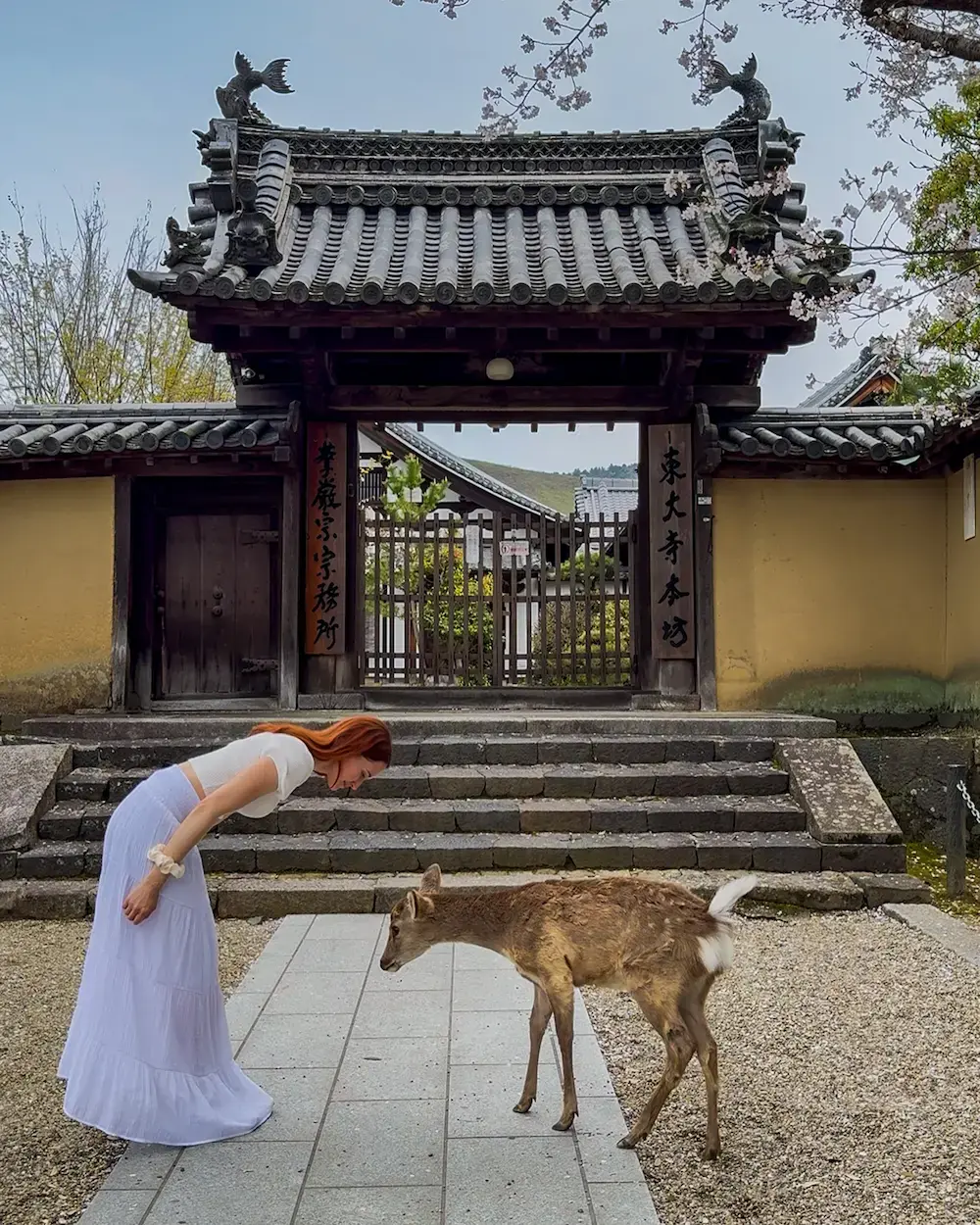
If you're visiting Kyoto for the first time, Nara is one of the easiest and most rewarding day trips you can make. Best known for its free-roaming deer and the impressive Todai-ji Temple, it's a completely different experience from Kyoto and well worth adding to your itinerary.
The famous deer of Nara Park
I mainly visited because I wanted to see the famous deer. One thing that surprised me was how different the atmosphere became the further I walked through Nara Park. While many of the deer near the entrances were surrounded by visitors, the ones deeper inside the park felt much calmer. If you're planning a visit, I'd recommend allowing at least half a day to explore at a relaxed pace. For a full route, practical tips and everything I did during my visit, read my complete Nara Day Trip Guide.
End the Evening at Nishiki Market
Known as "Kyoto's Kitchen", Nishiki Market is a lively covered market filled with local food stalls, small family-run shops and regional specialities. It's the perfect place to try a few local snacks and experience a different side of Kyoto beyond its temples and shrines.
The food stalls of Nishiki Market
Sampling the street food
Whether you're stopping for a quick bite or simply wandering through the covered arcade, it's a relaxed way to spend an evening in Kyoto. I found it to be the perfect place to slow down after a busy day of sightseeing.
Where to Stay in Kyoto for First-Time Visitors
If it's your first time visiting Kyoto, I'd recommend staying in Downtown Kyoto, Gion, or near Kyoto Station. Downtown offers the best balance between sightseeing, restaurants and nightlife, Gion is perfect if you're looking for a more traditional atmosphere, while Kyoto Station is the most convenient choice for day trips and travelling around Japan.
Below are my favourite hotel recommendations across different budgets, each offering something a little different while being well located for exploring Kyoto.
Kyoto is easy to reach from most major cities in Japan. If you're travelling from Tokyo, the fastest option is the Shinkansen (bullet train), which takes around 2 hours. You can also reach Kyoto by train from nearby cities like Osaka and Nara, making it an excellent base for exploring the Kansai region.
2. Is 3 Days Enough in Kyoto?
While I personally spent five days in the city, I believe three well-planned days are enough to experience Kyoto's highlights without turning your trip into a race from one attraction to the next.
3. Is Kyoto Worth Visiting on Your First Trip to Japan?
Absolutely.
Between its historic temples, traditional streets, bamboo forests and nearby day trips like Nara, Kyoto offers a completely different side of Japan from cities like Tokyo or Osaka. If it's your first trip to Japan, I think it's a destination you shouldn't miss.
4. How to Get Around Kyoto?
Kyoto is relatively easy to get around, but it's also much larger than many first-time visitors expect. I think a lot of the frustration comes from trying to fit too many attractions into a single day rather than from the transport system itself. Grouping nearby sights together, like in this itinerary, makes exploring the city much easier and more enjoyable.
During my trip, I used a Suica card on trains, buses and the subway, and found Google Maps surprisingly accurate for planning routes. One thing to keep in mind, however, is that buses can get caught in traffic, especially during busy periods. Whenever possible, I found trains to be the faster and more reliable option.
5. What Time Should You Visit Arashiyama Bamboo Grove?
As early as possible.
I visited shortly after sunrise, and it ended up being one of my favourite experiences in Japan. The grove becomes much busier later in the morning, so arriving early gives you the best chance to enjoy it before the crowds arrive.
6. Is Nara Worth a Day Trip from Kyoto?
Absolutely. If you're visiting Japan for the first time, I think Nara is one of the best day trips you can take from Kyoto. Between the free-roaming deer, Todai-ji Temple and the relaxed atmosphere around Nara Park, it offers a completely different experience from Kyoto itself.
✦ Final thoughts
If I could give you one piece of advice, it would be not to try to see everything. Some of my favourite memories from Kyoto came from the moments between the famous landmarks—watching the sunrise in Arashiyama, wandering through the streets of Higashiyama and sitting on the terrace at Yusa-tei while the rain fell outside.
Before your trip, don't forget to save the interactive map so you can easily follow this itinerary while you're in Kyoto. Have an amazing trip, and I hope Kyoto leaves you wanting to come back, just as it did for me.